When I decided to turn my short story ‘The Rise and Demise of Fat Kenny’ into a novel, the biggest consideration, literally, was how to turn fifteen hundred words into sixty thousand. I knew there was a novel in there somewhere. I just had to find the key, the way in. I read and I re-read. And the same paragraph kept jumping out. It wasn’t about Ronnie Swordfish and the blood-doping scam, or how Fat Kenny had made it into the big time overnight. It wasn’t even about how he walked into the river at the end and never came out. It was this:
‘Kenny was the lad we never picked for football, but who stayed to watch anyway. Who’d turn up on me doorstep, out the blue, askin me mum if I could come out and play. I’d tell Mum to tell him I was doin me homework, or something. It weren’t just me. I’d see him knock up and down the whole street. One door after another shuttin in his face. In the end, no-one bothered to even open the door to him. Poor bastard. His old man used to beat the shit out of him for bein fat. So did we.’
That was the heart-breaker. That was the key. The childhood. (more…)

I’ve never been much for outlining. Respect to those who can do it, but writing from a treatment has always seemed a little too much like work to me. Anyway, I like being surprised. Usually it’s my characters doing the surprising. Sometimes, though, writing off-the-cuff can lead to some spectacularly unintended consequences for me, the writer, as well.
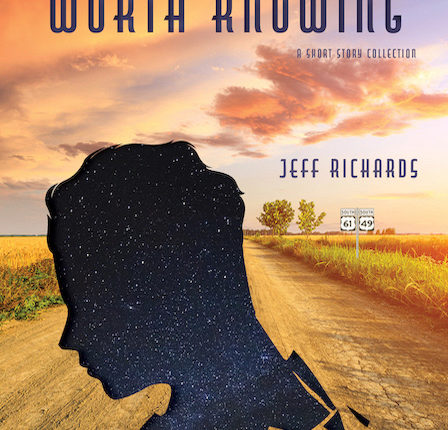
Five Shots of the Good Stuff: Why You Should Love Short Story Collections (Including Mine!)
Private Investigator Joe Geraghty is the undoubted star of my two published novels, Broken Dreams and The Late Greats, but it’s also a fact that he was the consequence of failure. A police procedural, Black and White, featuring Detective Sergeant Coleman, a minor character in the Geraghty books, pre-dates them. Looking back, the novel has obvious flaws. I didn’t know the police culture or live it. It was hard to effectively toss a year’s work in the bin, but it was clear to me that I had to step away and start over.
When
I don’t know quite where Charlie Fox came from. She just arrived one day, climbed off her motorcycle, sat down and started to talk. I knew from the start I’d be a fool to ignore her. Charlie had the watchful wariness of somebody who’d been through life’s grinder and was still putting herself back together again. She’d been a victim and worked hard never to become so again.
Writing “The End” felt great. The story felt good. Seemed I’d pulled off the rather odd inspiration. I was watching The Maltese Falcon (which I do often) and wanted to tell a variant of it. Not the nuts of bolts of it, but the twists and turns and the costly pursuit of something that is revealed to be a lie. I certainly had false starts trying to craft the story, but there I was, done, with a tight narrative around a single character. A sometimes nasty crime novella.
It’s funny that my first officially published work is a collection of short stories. I know that’s how it goes with a lot of writers – they start short and work their way up. You got Frank Bill, who’s critically acclaimed collection Crimes in Southern Indiana precedes his soon to be critically acclaimed novel Donnybrook. I know that Lou Berney, whose debut novel Gutshot Straight is one of my favorite reads of the past few years, he first published a collection of short fiction. Of course, his stories were nominated for Pushcarts and such, so I got no business comparing myself to him.
“The last time a private eye solved a murder was never.” -Ed McBain *
That Dante guy was onto something.