
If Not Now, Then When?
by Doris Wright
If Not Now, Then When? — I imagine that all writers have different processes, except perhaps those who are professionally schooled in writing. The most fascinating process I’ve ever heard of was Roald Dahl’s. He literally strapped himself in a chair in his writing hut, making it difficult to get up. But I don’t think he had the internet to contend with. My process is “just let ‘er rip” and then edit like mad.
For many years I had been writing poems and short stories, most of them a little off-kilter. Like the woman who thinks she needs to go back in time to commit a murder; the man who is obsessed with a neighbor’s legs, but it turns out he’s actually well down the path to dementia; the woman who kidnaps a neighbor’s baby when the neighbor acquires a monkey. But for some reason, I decided I wanted to write a novel. I didn’t have an actual story in mind, until I had a dream. All I recall is that there was a round human head sticking out of the ground talking to me. That was it. That’s how it began.
Because of my insecurities, this wasn’t going to be easy. The first step was to convince myself this didn’t have to be a good novel. In fact, to do this, I had to be okay with writing a not so great novel. Seriously. That freed up a lot of my brain juices. No pressure involved there. The best advice I gave myself was to just write. Let it flow. Don’t edit, not now at least. You can come back and edit. And I did that. Often. For years…and years. Good thing I love editing.
People helped. My husband, the first person who looked at the first few pages I had written, said, “This is good stuff.” He’s a great writer and I value his opinion. That was early on, and it kept me going. And I actually talked to a therapist. Two of them. The second one ordered me to sit at the computer every day for an hour—even if I didn’t know what I was going to write, even if I didn’t have anything to say. And so I did. It got boring sitting there just looking at my laptop, so I’d start to type words. Anything. As I said, just let it rip.
 Sometime later, I joined writers’ groups. It helped to listen to writers, hear or read their writing and see what they had to say about mine. And, importantly, it helped to think of myself a writer. I’m a writer! Wooey! And I went to some excellent writers’ conferences, where some excellent writers talked about their process. One put up a complex chart on a whiteboard, connecting various boxes with arrows. It looked like a physics formula. I was never any good in science or math, and my mind still goes numb when I see a formula.
Although I was an English major, I wasn’t really schooled in writing. So I bought some books on writing. Most of them are still unopened. I googled “how long does a novel have to be,” then it was a race to get to that magic number. Finally I got there. But I couldn’t stop. I kept going. And going and going. And not suddenly, I had 105,000 words.
When I had Elizabeth review my novel, she advised that the average first novel is more typically in the 80-90 thousand word range. So I had to shrink it. She also pointed out that I never met an adjective I didn’t like. That was true. I would often refer to the thesaurus to find the best word to describe something and see all these other wonderful adjectives. How could I leave them out? I’ve always loved words. The sound of them; the slightly obscure meanings. I heard a local writing expert say the story was more important than the words. I didn’t agree. They’re both important, but if I had to choose one, I’d chose the beautiful writing.
But I took her advice and edited the entire novel, losing the extra adjectives and even whole scenes. That was hard. But when it was suggested that I perhaps had too many characters, I dug in my heels. I had come to love these people. Writing experts say “you have to kill your darlings.” But what had they ever done to me? If they didn’t live in my novel, where would they live? And I decided the most important thing—I had to like my novel, whether or not anyone else did.
Then I was more or less finished. It was time to find an agent who would lead me to a publisher. Should be easy, right? Doesn’t everyone want to sell a part humor, part philosophy, part family reunion book about a friendship between a man and a plant? Turns out, they ask on what shelf will it go in the bookstore. Not knowing the answer is an impediment to sales, and my book had them scratching their heads. I won’t go into the whole agonizing process of sending out query letters (there are entire books about writing the perfect query letter!), looking for an agent or publisher, trying to find the person I was sure was going to love it, but instead receiving rejection letters. Lots of them.
Finally, I decided to self-publish the thing. You see, I’m getting on in years and thought, “If not now, then when?” But it turned out to be not so easy a thing. The “self” part should be emphasized more. There was a ton of jargon I didn’t understand and had to learn. After I signed the contract and forked over the cash, it still took months for it go to press. The money part didn’t bother me too much. I had set aside some money years ago for something special; this was it.
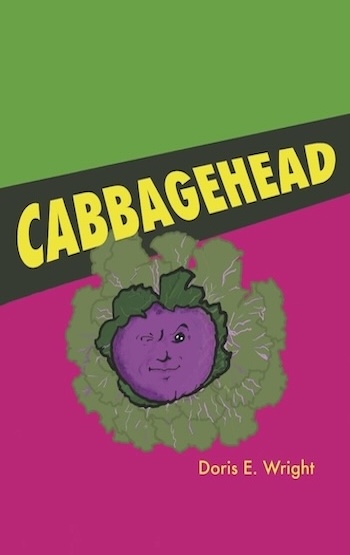
Along the way in the process, I realized I probably wasn’t going to make money from Cabbagehead, and that was okay. What I wanted, really wanted, was for people to read it. And if I was lucky, for some of them to enjoy it, laugh at appropriate times, and be moved by the serious moments.
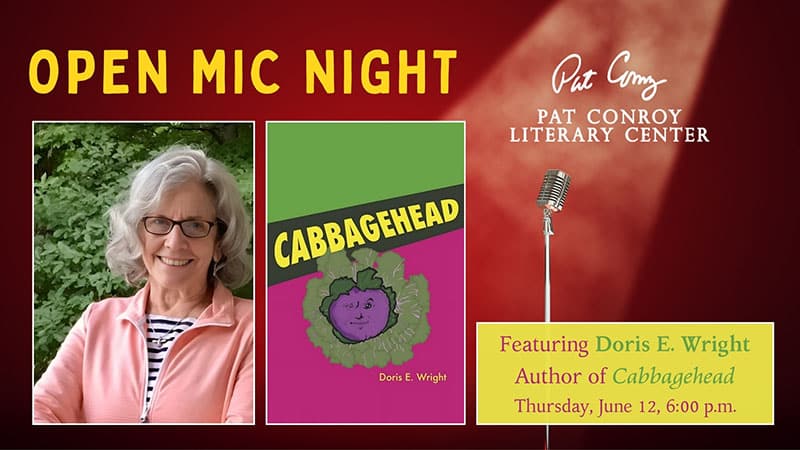
Cabbagehead is available in paperback and ebook at Amazon and Book Baby, and as ebook at Barnes & Noble. And if you’re in the Beaufort, SC area, you can see Doris as the featured speaker at The Pat Conroy Literary Center’s Open Mic Night on June 12, 2025.






About Post Author