

My Muzzle the Black Dog
Screenplay Journey
by Mike Cobb
My Muzzle the Black Dog Screenplay Journey — Earlier this year, I released my fourth novel, Muzzle the Black Dog. Set against the aftermath of the Centennial Olympic Park bombing, this psychological thriller follows the protagonist Jack Pate’s journey of self-discovery and redemption.
Thanks to the novel’s critical acclaim and its cinematic subject matter, several colleagues encouraged me to consider adapting it for film.
My first reaction was one of trepidation. Never having written a screenplay, I was clueless as to how to even begin. The learning curve would be steep, and I would need to rely on the advice and guidance of experts. Fortunately, I have a robust network of friends and colleagues who were more than willing to help, not only providing direct advice, but also introducing new contacts with deep industry experience. Am I drinking from the proverbial fire hose? You bet. Am I having a blast? Without a doubt.
Only time will tell whether this endeavor proves successful, but regardless of the outcome, I will reap the rewards that come with learning something new and different, creating a product that, a year ago, was not even a remote consideration.
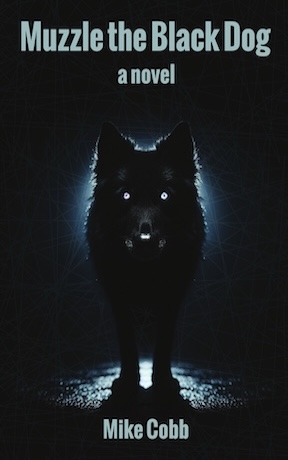 Adapting Muzzle the Black Dog into a screenplay is proving to be a humbling experience. The novel lives so much in the mind of its protagonist that translating it into a visual medium has required a fundamental shift in approach. In prose, I could explore Jack’s thoughts, fears, and rationalizations in depth. On screen, however, I have only action, dialogue, and visuals to convey what’s roiling beneath the surface. I’ve deliberately chosen to avoid voiceover narration, preferring to let the camera—and the actors—do the heavy lifting.
One of the biggest adjustments has been letting go of the novel’s structure. The story on the page unfolds in a slow, internal burn, with key revelations and flashbacks coming later in the narrative. But film demands different rhythms and reveals. To help the audience understand who Jack is, what he is going through, and why, I am bringing some of his formative experiences forward, embedding them as early flashbacks. This isn’t just about exposition; it’s about inviting the viewer into his fractured psyche from the start.
Screenwriting forces a ruthless clarity. You can’t hide in the language or linger too long in ambiguity. Every scene must show something essential. That constraint has paradoxically opened new creative possibilities, especially in exploring mood, silence, and subtext through what the camera sees but the character never says. It’s still Muzzle the Black Dog—but it’s becoming something new, shaped by the demands and possibilities of the screen.
As the screenplay takes shape, I look forward to sharing more about its journey to the screen.






You may also like



About Post Author